AI agents & workflows
Give agents a defined job and connect the steps, so recurring work follows your team’s process.

Build AI agents and workflows around your company’s knowledge, systems and standards. Start work in a conversation, on a schedule or when a connected event occurs. Keep people in control of the decisions that matter.
Give agents a defined job and connect the steps, so recurring work follows your team’s process.

Use company documents and data to answer questions and prepare work with the relevant sources in view.
Bring information from your systems into the work and let agents take the actions you permit.

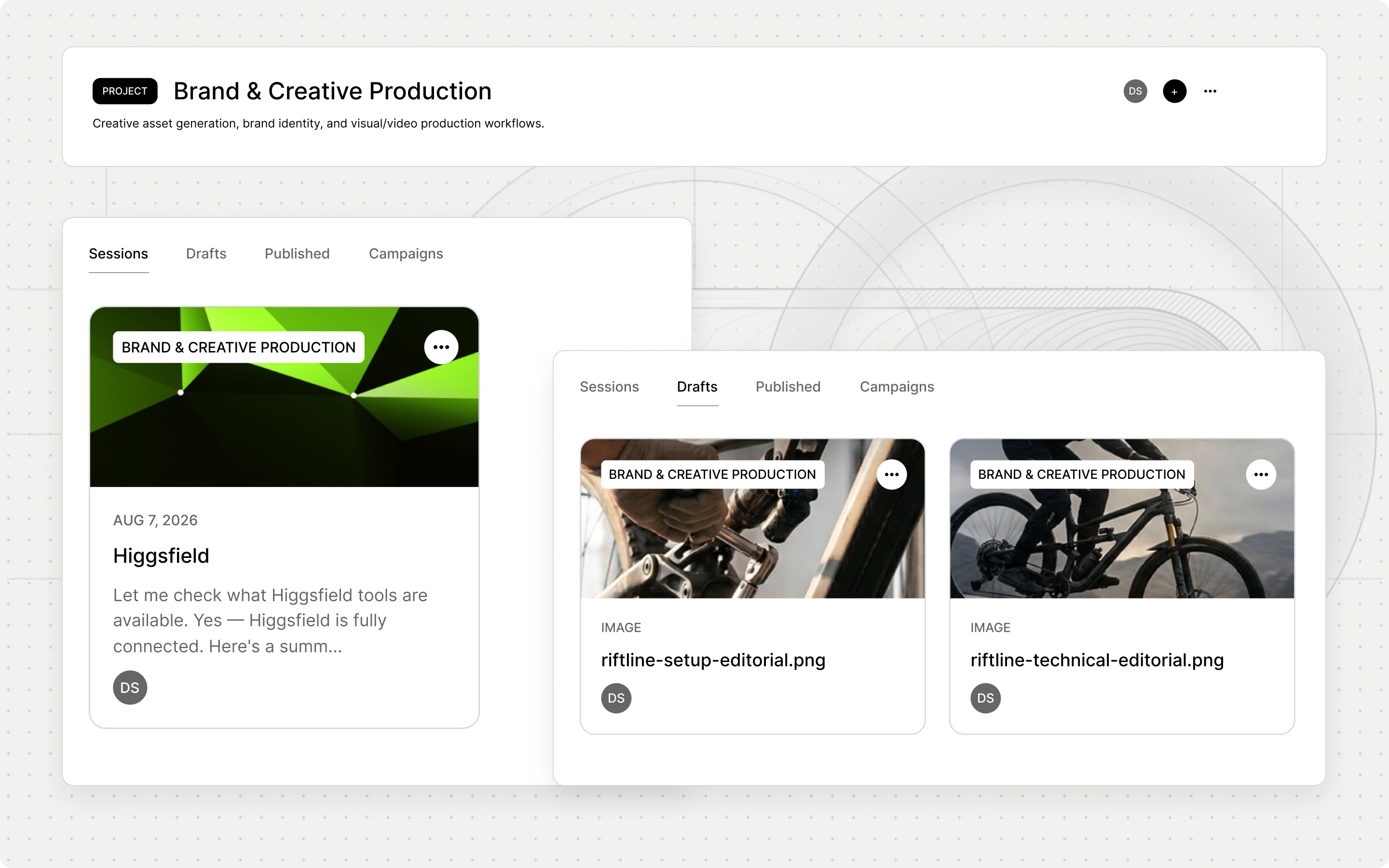
Keep the brief, sources, agent work, and reviewed outputs together, so the next person can pick up the work.

Set access, review points, and usage controls, so people can direct the work and manage how AI is used.
Choose models. Direct the work. See what it costs.
Model routing and supported open-weight and open models are available today. Review the results, usage and cost of each workflow, with human decisions built into the process.
Connect documents, business data, policies, and examples of good work. Agents can use those sources when preparing an answer or deliverable, so reviewers can assess the work against the same information.

The same platform can prepare a sales proposal or reconcile delivery before billing. Each workflow brings together company context, defined steps and accountable decisions.

Sales
Turn a campaign brief into a proposed scope, then prepare a branded proposal deck when the required checks permit it. A reviewer can approve, request changes or hold the work.
Internal approval to draft is separate from client release.

Finance
Compare the approved plan, order records and delivery actuals. Identify discrepancies, propose corrections and route material exceptions for human approval before finalizing the close receipt.
The workflow does not issue invoices or credit memos.
Each workflow runs within the models, access, schedules and review points you configure.
Route each step to a supported model, or fix a model where a step needs one. Supported open-weight and open models are available today.
Each connection defines what agents can read and which actions they may take.
Start work on a schedule or when a connected event occurs, not only from a prompt.
Code runs in an isolated environment, separate from permitted connector actions. Configured review gates hold work until a person decides.
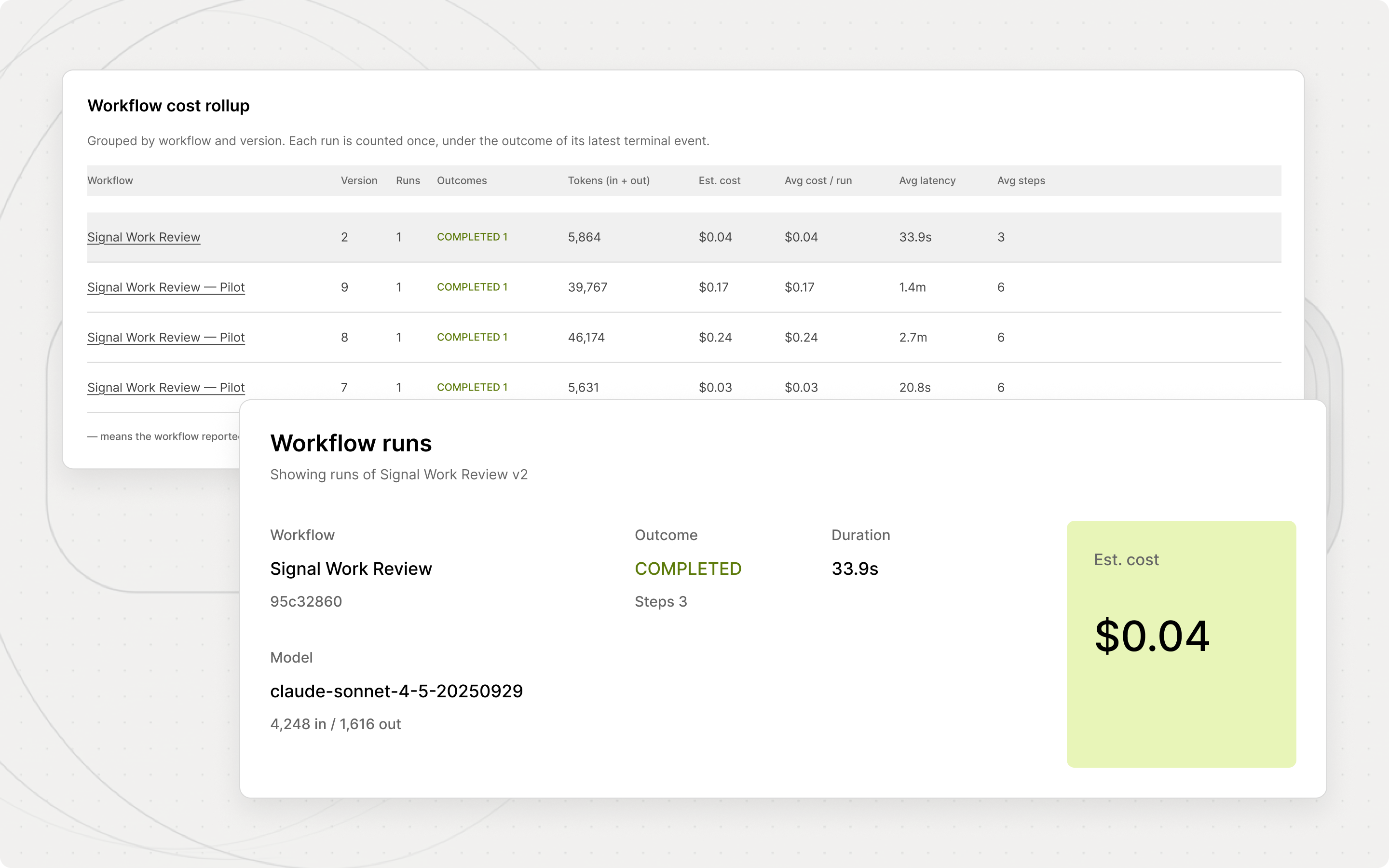
Inspect duration, token usage and estimated cost alongside the workflow’s activity and outputs.
Usage & cost controlsAn observing agent analyzes intent, interaction patterns and knowledge used or captured, then recommends ways to strengthen AI adoption and literacy.
Observed facts are kept separate from inferred patterns.
Organizational learningUse the ROI agent to compare the current process with an AI-assisted workflow. Make assumptions visible and consider human review, rework, implementation and infrastructure alongside model costs.
Modeled value is distinct from realized savings.
Assess workflow valueVeylan brings the systems your business already uses into a controlled execution environment. Four layers connect how people work with the knowledge, tools and models agents need.

Conversations, workspaces and connected applications give people a place to start, review and continue work.
Agent services coordinate models, tools, scheduled work, events and human decisions, so the process can run beyond a single prompt.
Tenant-specific context and working records keep the relevant sources, conversations and outputs connected.
Connectors, uploads and ingestion prepare business information for retrieval and analysis.
Set which sources and tools agents can use, the actions they may take, and the points where someone must review the work. Inspect activity and retain the available outputs and decisions, so responsibility stays clear.

The hosted platform is available today. Customer-cloud deployment is in development for organizations that need control over infrastructure and data location.
Agree what your team can inspect, change, reuse, and export, and who maintains the workflow. These rights and responsibilities are set out in your deployment terms.
Start with a recurring task, a responsible owner, and a clear definition of a good result.
Describe the task and expected result. Give each agent instructions that reflect how your team works.
Add the documents, records, and tools the work needs. Set what each agent can read and do.
Arrange agent tasks, model use, and handoffs into a repeatable sequence.
Set usage controls and decide where people check the work, request changes, or authorize the next step.
Review results, activity, time, and cost. Refine the instructions and model choices before expanding use.
Create documents, analyses, images, video, and audio with the tools configured for the workflow. Review the result in context and keep useful work ready for reuse. Connected actions follow the permissions and review points defined for that workflow.
Each integration defines the data available and the actions an agent is allowed to take.
Build workflows that:

Bring a recurring process, its source systems and a sample result. We’ll define the permitted actions, reviewers and success measures, then agree what to test.