
Turn campaign results into a renewal proposal
Connect campaign results, account context, and available inventory to prepare a grounded renewal conversation.
People decide: renewal recommendations and client commitments.
Explore workflow
Bring account signals and company context together to prepare a relevant next conversation for the seller.

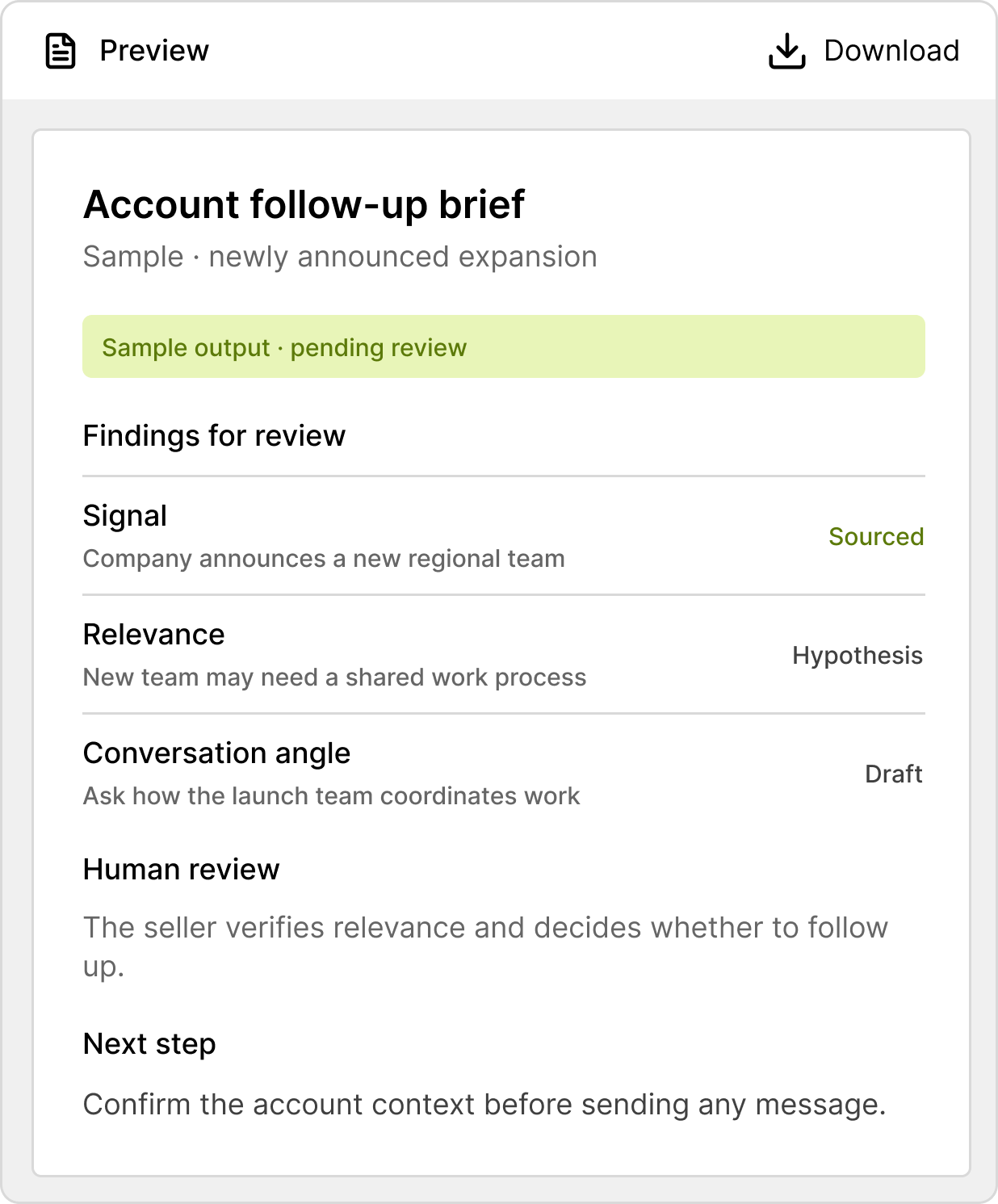
A signal is useful when a seller can see why it matters. Organize the available evidence, relate it to the account, and prepare a follow-up that a person can check before contacting the buyer.
Define the accounts, sources, and questions the seller wants to monitor.
Starts with: an account scope and selected signals.
Collect the available signal evidence and account background from the supplied or connected sources.
Produces: a sourced account context.
Explain the signal’s relevance and draft a conversation angle or follow-up. Flag uncertain assumptions.
Produces: an account brief and draft outreach.
The seller checks the evidence, edits the proposed message, and decides whether to act.
People decide: account priority and buyer outreach.
Save the reviewed brief and next action for the account owner.
Produces: an owned follow-up plan.
Your reviewer can request more evidence or revisions before the work moves forward.
Connect campaign results, account context, and available inventory to prepare a grounded renewal conversation.
People decide: renewal recommendations and client commitments.
Explore workflowBring your process and a sample result. We’ll map the sources, steps, and review points around the way your team works.