
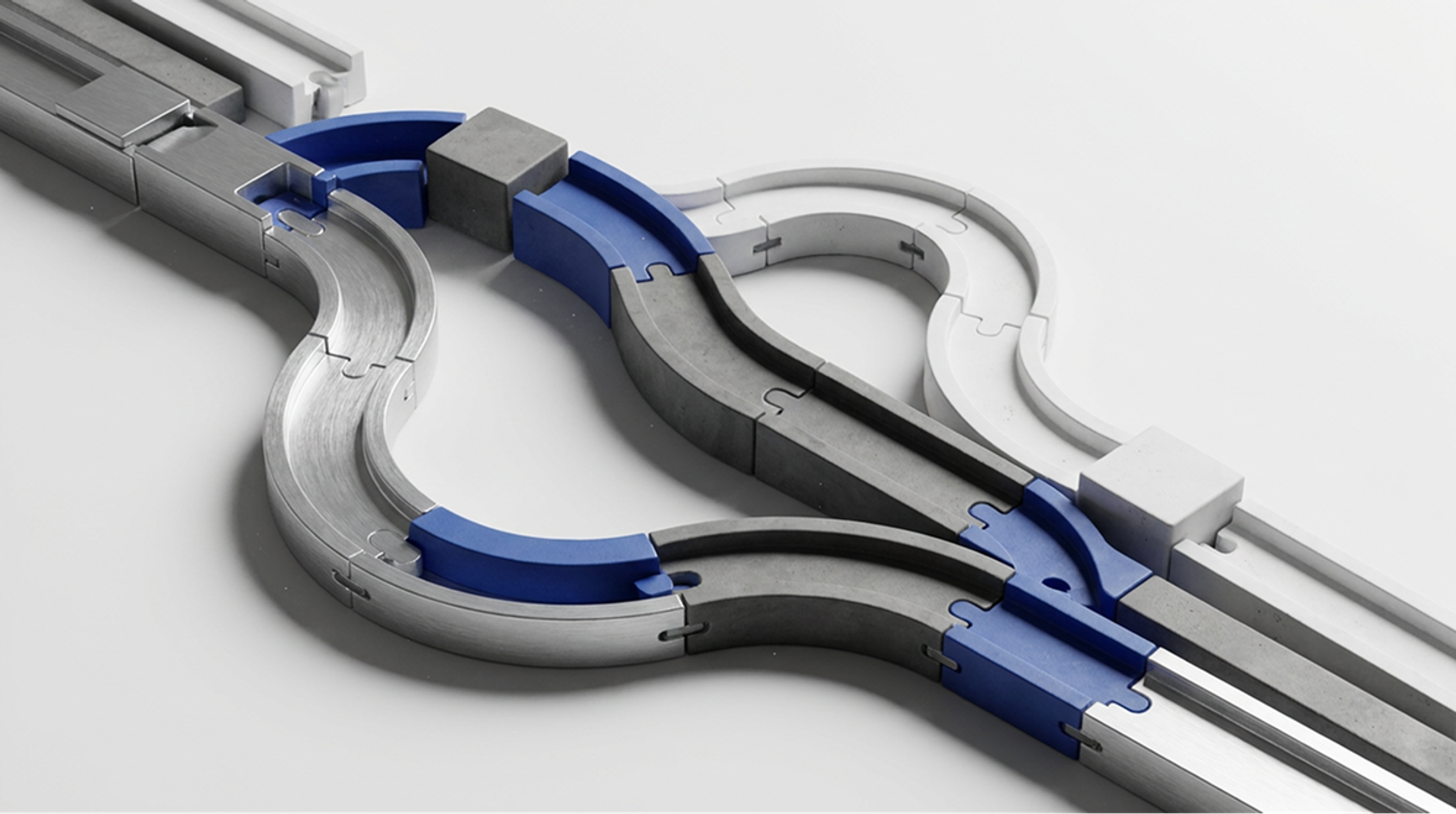
The Loop Is the System
The agentic coding world figured something out. The loop is the system, not the model. Plan, act, observe, repeat. Tools compound in capability because the feedback architecture is engineered, not because the model is smarter.
The same architecture applies to go-to-market systems. The organizational decision to build it or not is the operating model decision most executive teams have not yet made.
Your Go-to-Market Motion Either Learns or It Does Not
If it does not learn, every cycle costs the same to produce and starts from the same baseline of strategic assumption. If it does, the cost of producing a better outcome decreases with every cycle. The intelligence advantage over competitors who are not closing the loop widens.
Most organizations execute faster than they did three years ago. OpenAI reports that 75% of workers across enterprises say AI improved speed or quality, saving 40 to 60 minutes per day. McKinsey found a 3.8x performance gap between AI leaders and laggards in operations.
But the observation layer does not exist in a systematic form. The mechanism that takes what the market told you and updates the strategy that drives the next cycle is missing.
Every new campaign starts from the same strategic assumptions. Every new brief inherits the same positioning hypotheses. Performance data from the last cycle gets reviewed in a dashboard and then set aside. It does not update the brand strategy. It does not sharpen the positioning. It does not inform the creative capital decisions for the next cycle.
The loop is open.
The Five Loops That Make Up Veylan's Go-To-Market Architecture
1. Signal Intelligence Loop
Continuous competitive positioning intelligence and market signal synthesis routed through executive review. Intelligence persists in organizational memory and directly informs strategic positioning decisions, campaign hypotheses, and narrative architecture.
This loop runs continuously and feeds the other four.
2. Content and Editorial Loop
Organizational narrative management governed by brand voice architecture and institutional knowledge. Approved strategic narratives flow to distribution. Engagement evidence feeds back to inform the narrative hierarchy and editorial prioritization.
Most organizations stop at distribution. The market signal does not return to influence strategy.
3. Brand Strategy Performance Feedback Loop
This is the missing arc. This is the highest-stakes loop.
Brand architecture produces positioning. Positioning drives go-to-market investment. Market response generates evidence. Evidence should update brand architecture.
That closing leg is the one most organizations have not built.
The brand strategy lives in a presentation deck reviewed annually. It does not sit inside the system that measures whether it works.
When this loop closes, the brand strategy becomes a governed living system. The positioning sharpens based on evidence, not leadership opinion. The narrative hierarchy reflects what the market actually responds to. The audience segmentation is not a hypothesis carried forward from last year's research. It is a receipt from the current market.
4. Demand and Revenue Intelligence Loop
Intent signals qualify into pipeline. Account intelligence informs strategic narrative. But evidence from what messaging closes deals rarely feeds back into the brand architecture or the creative capital decisions that produced it.
The organizations that close this loop know which positioning generates revenue, not just which content generates clicks.
5. Creative Capital Loop
Currently a production pipeline in most organizations. Brief to asset to campaign. Not yet a learning loop.
The organizations that close this loop treat creative output as compounding organizational capital. Each campaign produces evidence about what resonates. That evidence updates the creative brief for the next campaign. The advantage widens with every cycle.
Why Most Executives Have Not Made This Decision
The reason is organizational, not technical.
Most leadership teams have not formally decided who owns the intelligence layer. The tools exist. The data exists. What does not exist is a governance decision about what gets promoted from observation into strategy, who authorizes that promotion, and where the intelligence lives so it is available to the next cycle.
This is a leadership decision before it is a technical one.
The organizations that have made it do not just move faster. They accumulate a strategic intelligence advantage that competitors who are still running open loops cannot replicate without starting over.
Sovereignty as an Operating Model Decision
Sovereignty is not a technology choice. It is an organizational decision about ownership.
When your CMO changes, when your agency relationship ends, when your model provider pivots its strategy, does the intelligence your organization built stay inside your architecture or does it go with the vendor?
Most organizations have not answered this question.
The intelligence that runs their go-to-market motion lives in a combination of vendor platforms, agency relationships, and individual institutional knowledge that walks out the door.
Owned intelligence is a governance decision. It requires deciding that the context, the receipts, the provenance, and the organizational memory of every campaign, every positioning decision, and every market observation persist inside an architecture your organization controls.
The Executive Decision
Authorize one closed loop.
Identify who owns the intelligence that comes out of it.
Establish the governance that promotes observation into strategy.
Start with the Brand Strategy Performance Feedback Loop. It is the highest-leverage decision because it connects the strategic layer directly to market evidence.
When that loop closes once, the organization understands what systematic learning feels like. When it closes systematically, the intelligence compounds.
The model is not the moat. The governed loop is.